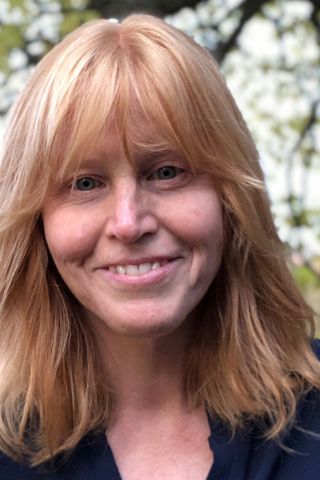
What happens in the early years to transform a child into a literate human? How do biology and education work together to guide this transformation? Join Harvard Teaching Fellow and Montessori teacher Julia Volkman for a fascinating look at the evolution of language, neurodevelopment of the child, and the Montessori/Dwyer language program.
In this video
Julia Volkman follows how a child gets from talking to reading and writing, for parents and teachers of 3- to 6-year-olds. It starts with back-and-forth talk and sound games like I Spy. Later parts cover sandpaper letters that children trace with a finger, preparing the hand for writing, and what has to come in order.
Chapters
- 0:00 Welcome and how human language evolved over 8,000 years
- 4:42 Back-and-forth talk, rich vocabulary and working memory
- 8:56 Building spoken language with songs, rhymes and stories
- 14:09 Teaching new words with the three-period lesson and Bring Me
- 17:24 Why sounds need real people, and the four levels of I Spy
- 24:01 Why the brain isn't built to read and has to rewire itself
- 28:21 Sandpaper letters, phonograms and why cursive comes first
- 32:32 When to start the movable alphabet and what to write first
- 38:40 Preparing the hand for writing, from tracing to chalkboards
- 41:24 First reading with object boxes, word cards and sight words
- 46:34 Phonogram folders, dictionary and spelling alphabets
- 54:45 What has to come in order, and a 3-2-1 reflection